 Why do 95% of all Traders fail their Prop Firm Challenge?
Global statistic shows that more than 95% Traders who engage in to Prop Firms do not pass their challenge. This is because they break at least one or more of the Prop Firm rules resulting to hard breach and consequently losing both the account and their subscription fee.
- Not having an edge in the market (Poor trading strategy).
- Poor risk management.
- Wrong trading psychology (Most trader wants to get rich quick)
- Over Trading.
- The fear of loosing.
- Improper risk-reward ratio
- Exercising prohibited trading Prop Firm practices.
1. Not having an edge in the markets (Poor trading strategy).
What is a Market Edge?
A market edge is a trading technique which is acquired through experience and observation which help the Trader of increasing his chances of achieving profitability over time. It can also be seen as a technique, observation, or approach that creates a cash advantage over other market players. Many systems appear successful because they win often yet fail when losses are larger than gains. Trading with an edge does not imply consistent monthly profits or uninterrupted performance. Trading with an edge accepts uncertainty and works within probability rather than attempting to eliminate risk. An edge is also not defined by a high win rate alone, nor is it created by relying on a single indicator.
In professional trading, expectancy measures the average outcome of repeated decisions and defines the real edge in trading. Without positive expectancy, no trading edge can survive costs, volatility, or long-term execution. Expectancy is driven by three connected factors: win rate, payoff size, and risk per trade.
That being said, more than 95% of all Traders fail their Prop Firm Challenge because they don’t have the edge in trading the markets. Most Traders of today are just cajoled by the large capital being provided by the Prop firms. They jump in to start buying challenges without having the trading experience. The edge to win and outsmart market makers can only be achieved by market experience which can only be acquired by so many years of trading screen time. 95% of all Traders fail their Prop Firm Challenge because they do not have a good trading strategy, or skill to keep loses smaller while trading with Prop Firms who have a well-defined risk structure. Trading the edge works when the value of winning trades exceeds the impact of losing trades after all costs.
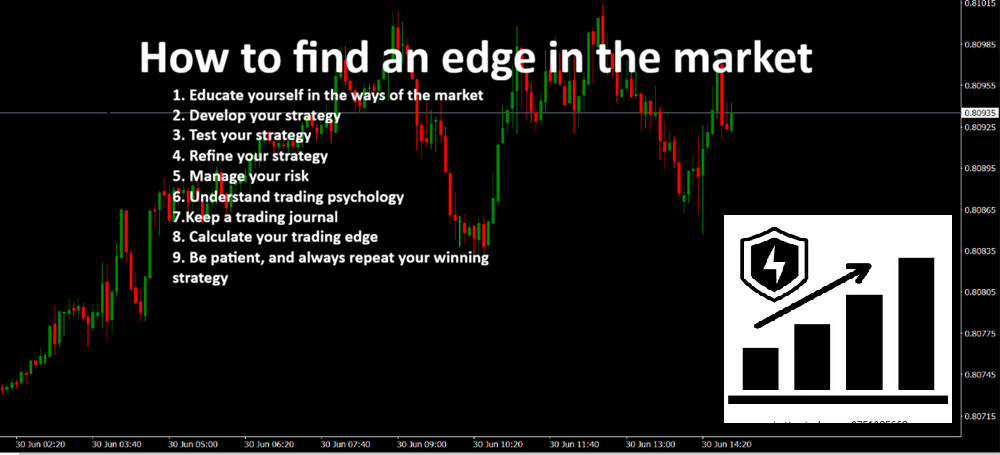
How to find an edge in the market
It usually takes so many years of active trading in order to have an edge in the market. Traders who have been failing their Prop Firm Challenges can follow some of these guidelines bellow in finding and defining their edge.
- Educate yourself in the ways of the market
- Develop your strategy
- Test your strategy
- Refine your strategy
- Manage your risk
- Understand trading psychology
- Keep a trading journal
- Calculate your trading edge
- Be patient, and always repeat your winning strategy
Generally, it usually takes so many years of losing in the market before traders will finally understand what the market entails to find their edge. If 95% of all traders who fail Prop Firm Challenges apply in their trading high degree of discipline, Patience and consistency, they will take a shorter time in finding their edge in the markets and pass their prop firm challenges without stress. Visit our homepage to learn more about our Services. You can also learn more about the nature of Prop Firm challenges.
2. Poor risk management.
Poor risk management in Prop Firm Trading is not taking adequate measures to protect capital and minimize loses. It is the failure to control capital exposure, leading to devastating, emotion-driven losses. 95% of all Traders fail their Prop Firm Challenge mainly because they don’t manage risk properly consequently leading to the breaching of the daily and total trading rules laid down by these firms. Even if you have the market edge, if your risk management is not in line with Prop firm rules, you hardly succeed in trading the Funded Account in the long run. Risk management is the core fundamental feature in trading. What is the need for you using high risk to pass your Prop Firm Challenge only to breach the account when funded?
Risk management is an essential part of a successful trading strategy, regardless of which asset class you choose to trade. The best trading strategy is worthless with improper risk. A trader with an average strategy and excellent risk management will almost always outperform a trader with an excellent strategy and poor risk management. The reason is straightforward: poor risk management turns a temporary losing streak into an account-ending event. Good risk management keeps you in the game long enough to improve.
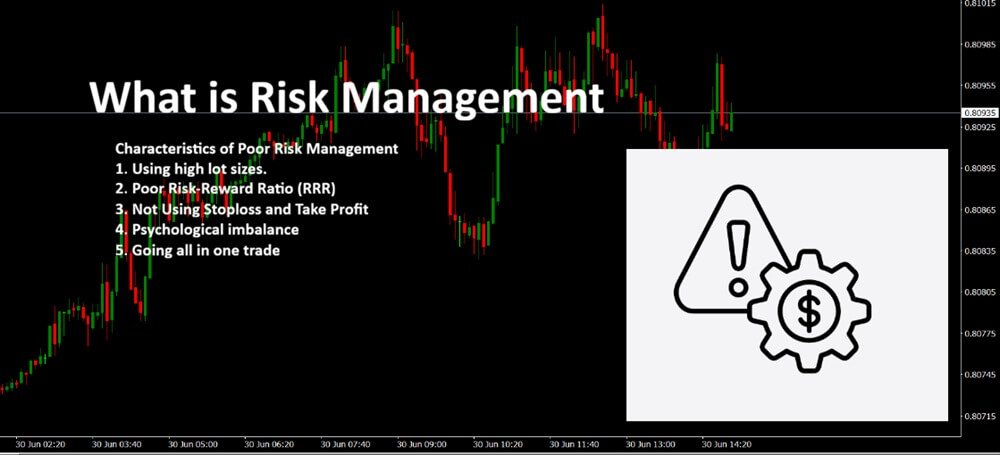
Characteristics of Poor Risk Management
Most traders fall every day in the pit of poor risk management without even realizing it. It usually manifests itself in the following ways:
- Using high lot sizes. Any risk above 1% per trade is considered as poor risk management because most Prop firms only have 10% maximum drawdown.
- Poor Risk-Reward Ratio (RRR): You should never use a straight-line risk reward ratio of 1:1 even if you have a high win-loss ratio. Use a profitable RRR like 1:2 and 1:3.
- Not Using Stoploss and Take Profit: Not having an exit strategy is a feature of poor risk management.
- Psychological imbalance: fear, greed and panic often result to poor risk management.
- Going all in one trade: This is the act of using all the leverage provided by the Prop firm to execute one trade just to pass the challenge quicker.
In the nutshell, 95% of all Traders will fail their Prop Firm Challenges because they don’t adhere to practice proper risk management following the Prop firms’ drawdown rule. It usually takes so many years to accept the fact that risking 1% per trade is a sustainable factor for long-term success in the Prop Firm game. If you are facing difficulties in passing your Prop Firm Challenge, contact us for help.
3. Wrong trading psychology
Trading psychology refers to the mental and emotional aspects that influence how traders make decisions. It influences how people behave in the financial markets. It is widely considered the most critical “edge” in trading, distinguishing consistently profitable traders from those who panic out of winners and chase losers. 95% of all Traders fail their Prop Firm Challenge and breach their Funded Accounts because they have the wrong psychology in trading. Emotions such as fear, greed, pride, regret, and overconfidence often play a bigger role for many traders while trading their Prop Firm account.
Emotional control is the main aspect of trading psychology. It is the main reason why 95% of all traders fail their Prop Firm Challenges. The core emotions of trading are?
- Fear — Triggers hesitation, premature exit of winning trades (to lock in small profits), or the refusal to cut a losing trade due to the fear of being wrong.
- Greed — The siren song that convinces you to abandon your rules, hold a winning trade past its target, or over-leverage to force a windfall.
- FOMO (Fear of missing out) – The market rips higher without you. You feel the panic of being left behind. You jump in late, near the top of the move, with a size larger than your plan because the urgency overrides risk management.
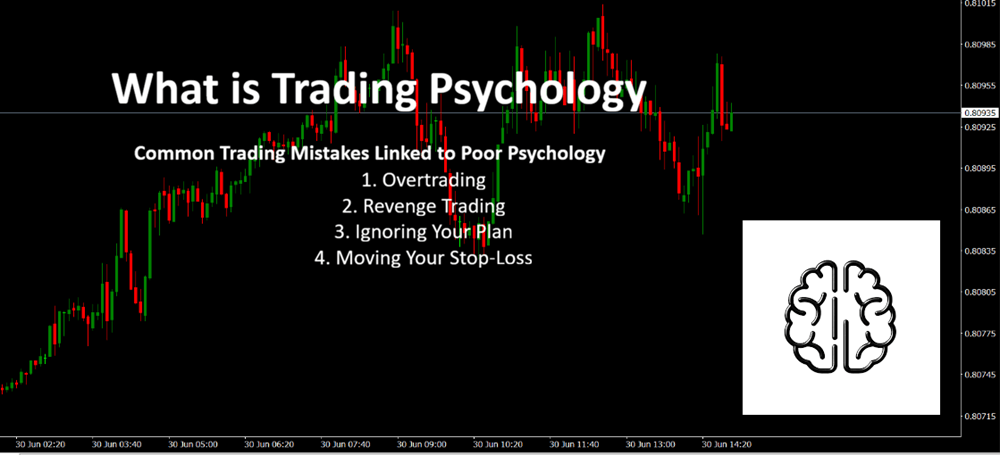
Common Trading Mistakes Linked to Poor Psychology
Trading mistakes are often linked to lack of psychological hygiene, as they’re the patterns that quietly eat away at your capital.
- Overtrading: Fueled by adrenaline, fear of missing out, or the urge to “make back” losses. Feels productive, but it’s usually a mess.
- Revenge Trading: Lost money on a bad trade? Entered another one 30 seconds later to get it back? That’s revenge trading. And it rarely ends well.
- Ignoring Your Plan: You spent hours crafting your strategy, then tossed it out the window the moment things got spicy. Classic.
- Moving Your Stop-Loss: The trade’s going against you, but instead of exiting, you “just move it a little further.” Spoiler: it’s usually denial dressed as hope.
Each mistake is rooted in emotion—fear, anger, overconfidence and often account for why 95% of all traders end up losing their Prop Firm Accounts. Spotting these habits is step one. Replacing them with rules? That’s where real growth begins.
Conclusion
If trading is a battlefield, your mind is the general that maps out the strategies, chooses the indicators, and setups. Mastering trading psychology doesn’t mean never feeling fear or greed—it means knowing what to do when those emotions show up.
The better you understand your internal patterns, the more clarity you bring to the market. And clarity, my friend, is a serious trading edge. Learn more about our services.